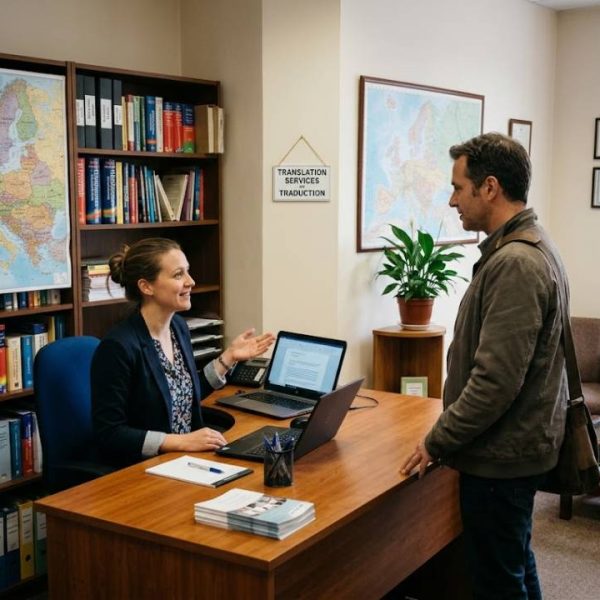
Large online platforms promise instant quotes, but many clients still prefer talking to a real person who knows the market. A local translation office combines language skills with personal service. It serves companies that need contracts and manuals, and private clients who need certificates, letters and school records. Here is what to expect and how to get the most from the relationship.
A real person who knows your case
At a smaller office, you speak to the people who manage and often perform the work. They remember your preferences, your terminology and your usual deadlines.
Personal contact reduces errors, because questions are answered before they turn into mistakes. That alone can save days on a complicated project.
Knowledge of the local market
Offices rooted in a region understand its authorities, forms and customs. They know which documents local institutions accept and how they like them to look.
This knowledge matters when you deal with courts, schools, banks and public offices that follow strict rules.
Services for companies
Businesses use translators for contracts, price lists, tenders, product sheets, websites and internal policies. Regular clients often agree on a monthly volume and a fixed contact person.
For a broad starting point, explore professional document translation services that cover the most common business and official papers.
Services for private clients
People need translations for study abroad, work permits, marriage, property purchases and inheritance. Each case comes with its own stamp and format requirements.
A good office explains what is needed, saves you trips between authorities and warns you about deadlines.
Working with Central and Eastern European languages
Languages such as Polish, Czech and Ukrainian are in strong demand because of trade, work migration and study. Their grammar and alphabets pose challenges that require native knowledge.
Names, addresses and company forms must follow local conventions, or documents may be rejected.
Choosing between freelancers and offices
A freelancer can be a great choice for steady, specialized work. An office offers backup, a wider range of languages and a quality process with a second reader.
Our freelance translators checklist helps you judge which model suits your project best.
How a typical project flows
You send the files, the office checks the volume and difficulty, and you receive a quote. After approval, the text is translated, reviewed and delivered in the agreed format.
Ask about revision rounds, since small changes after delivery are normal and should be covered.
Certified and official translations
Many institutions ask for a certified translation with a stamp or a statement. The translator must be authorized in the relevant country, and rules differ widely.
Always confirm with the receiving office what form it accepts before ordering.
Quality you can check
Ask about the review process, the experience of the translators and the tools used. A good office will happily explain how it avoids errors.
Standards such as ISO 17100, described by the International Organization for Standardization, set requirements for translation services, and many professionals follow them.
Confidentiality
Offices handle business secrets, personal records and legal files. They should sign confidentiality agreements and store data securely.
If a document is especially sensitive, say so in your first message so that the right precautions apply.
Speed without panic
Local teams can often react fast, especially when you call. Still, quality needs time, and rushing increases the risk of mistakes.
Plan ahead, especially for long documents and certified translations that require stamps or postal delivery.
Fair prices and clear terms
Prices depend on language, subject, length and urgency. A small office may offer lower rates for repeat clients or large volumes.
Insist on a written quote that lists all fees. Surprises on the invoice damage trust.
Feedback makes the work better
Tell the office what you liked and what you would change. Provide glossaries, past translations and brand guidelines.
This information helps translators match your style and strengthens the relationship.
Technology in a small office
Modern offices use translation memory and terminology tools that store approved phrases. This keeps repeated wording consistent across documents and can lower costs for large projects.
Technology supports the translator, but it never replaces the human judgment needed for meaning and tone.
Interpreting and other language help
Many offices also provide interpreters for meetings, negotiations and appointments, as well as proofreading and transcription. Using one provider for all language needs keeps terminology consistent.
Ask what other services are available, since a one-time translation request often grows into regular cooperation.
Getting started
Prepare your documents, note the language pair and deadline, and write down any special requirements. Then contact two or three offices and compare their answers.
A partner for the long term
The best offices grow with their clients. They suggest solutions, warn about risks and keep your documents organized.
When language matters to your business or your life plans, a reliable local partner is worth far more than the cheapest quote.