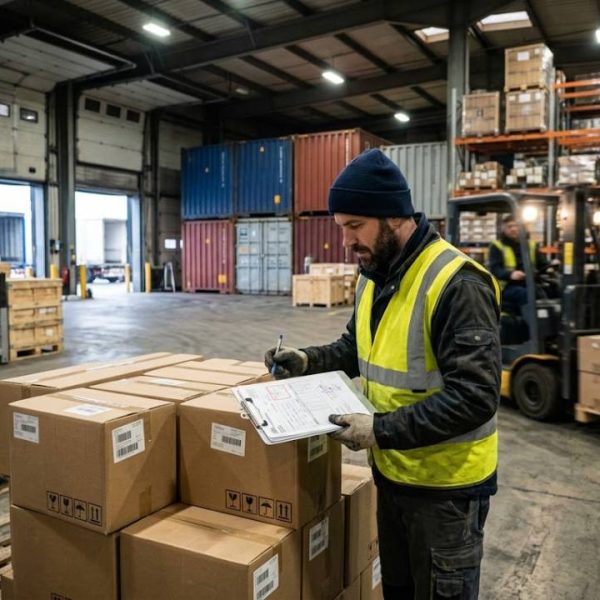
Customs delays rarely come from the goods themselves. Far more often, they come from paperwork that was translated in a hurry, or not translated with enough precision, leaving an inspector unable to confirm exactly what is inside a shipment.
Commercial invoices are the first place errors appear
A commercial invoice with vague or mistranslated product descriptions gives customs officials a reason to hold a shipment for further review. Importers working with Russian suppliers often invest in careful translation english to russian of invoices and packing lists so that product codes and descriptions match exactly across both versions.
Certificates of origin need exact terminology
A certificate of origin translated loosely can trigger a customs dispute over tariff classification, sometimes adding weeks to a shipment's clearance. Businesses importing from Ukraine increasingly rely on precise english ukrainian translation of these certificates, since even a small wording mismatch can shift a product into a higher tariff category.
Keeping terminology consistent across every shipment
Import businesses that handle regular shipments benefit from a cat tool that stores approved translations for recurring product names and customs codes, so the same item is described identically on every invoice, regardless of which staff member prepares the paperwork.
Why a single mismatched term causes real delays
Customs systems increasingly cross-check descriptions against tariff databases, and a translated term that does not match the expected classification can flag a shipment for manual review automatically. What might seem like a minor wording choice can add days of storage fees and demurrage charges while the discrepancy gets sorted out.
Industry groups highlight this as a recurring problem
Organizations like the Globalization and Localization Association have pointed out that translation quality in trade documentation is an underappreciated cause of supply chain delays, compared to the attention given to shipping logistics and tariffs themselves.
Building a translation checklist into the import process
Import businesses that build translation review into their standard shipping checklist, rather than treating it as an afterthought, catch inconsistencies before documents ever reach a customs official. This simple process change often prevents the exact kind of delay that costs far more than the review itself.
Working with freight forwarders who understand the risk
Experienced freight forwarders often flag translation issues in commercial documents before submission, having seen firsthand how a single mistranslated term can hold up an entire container. Choosing a forwarder who actively reviews translated paperwork, rather than just passing it along, adds a useful layer of protection against costly customs delays.
Packing lists deserve the same scrutiny as invoices
Packing lists are sometimes treated as a secondary document compared to the commercial invoice, yet customs officials frequently cross-reference the two, and any inconsistency between them can trigger a manual inspection. A packing list translated separately from the invoice, without checking that quantities and descriptions match exactly, creates exactly this kind of red flag.
Customs errors are expensive mainly because they are procedural: the goods are fine, the classification is fine, and the paperwork missed a date. Deadlines behave that way across every part of running an import business, punishing disorganisation rather than ignorance. That is exactly the shape of estimated quarterly taxes, where the penalty attaches to the schedule rather than to anything you got wrong about the numbers.
Customs errors are usually clerical rather than dramatic, which is precisely why they keep happening. Importers who route declarations, invoices and certificates through proper document translation services remove an entire category of avoidable delay at the border. The saving is measured in cleared containers rather than in per-word rates.
Regulatory certificates carry their own risks
Products subject to safety, health, or environmental regulations often require certificates that must be translated with technical precision, since regulators check these documents against specific legal standards. A translator unfamiliar with the relevant regulatory framework can miss nuances that make the difference between a certificate being accepted or rejected outright.
The hidden cost of storage fees during delays
Every day a shipment sits in customs due to a documentation issue adds storage fees that most businesses never budget for in advance. These costs compound quickly for time-sensitive goods, sometimes exceeding the cost of the shipment's original translation many times over, which makes prevention far cheaper than the cure.
Training staff to spot translation red flags early
Import teams that train staff to recognize inconsistent terminology or awkward phrasing in translated documents catch problems before submission rather than after a customs hold notice arrives. This kind of internal awareness costs nothing beyond a short training session, yet it consistently prevents avoidable delays down the line.
Digital customs systems raise the stakes further
As more customs authorities move to digital filing systems with automated checks, inconsistent translations are flagged faster than ever, sometimes within minutes of submission rather than after a physical inspection. This shift means the old approach of fixing translation issues after a shipment arrives no longer works reliably, since automated systems catch mismatches before a human even reviews the file.
The same discipline matters when the trade lane involves Arabic-speaking markets, where invoices, certificates and contracts all have to survive the same automated checks in two languages. UK importers who build business translation services into their standard workflow catch terminology mismatches before a shipment leaves, not after it is held. A short checklist covering document types, approved terms and review responsibilities is usually enough to get started. Once that routine is in place, clearance problems tied to language become rare rather than routine.
Choosing translators with trade documentation experience
Not every qualified translator understands the specific conventions used in commercial invoices, certificates of origin, and customs declarations, which follow fairly rigid formatting expectations. Import businesses that work with translators who specialize in trade documentation, rather than general business translators, see noticeably fewer customs holds tied to language issues.
Getting this right does not require a large compliance department. A small business that simply treats translation quality as part of its customs process, not an afterthought, usually avoids the majority of delays that catch less prepared competitors off guard.